DISCOVER HPE DLC (DIRECT LIQUID COOLING)AT THE TECHCENTER
A different approach to cooling for high-performance and compute-intensive environments.
THE CHALLENGES OF MODERN COOLING
The increase in compute workloads, infrastructure density and energy constraints is driving a rethinking of cooling approaches. Traditional cooling solutions are gradually reaching their limits when faced with modern compute environments. Direct Liquid Cooling (DLC) provides a practical response to these challenges by improving thermal control, system stability and overall energy efficiency.
Discover the rack at the TechCenter


KEY FIGURES*
+20%
more performance per kW
87%
carbon reduction
86%
cost savings
DIRECT LIQUID COOLING, IN PRACTICE
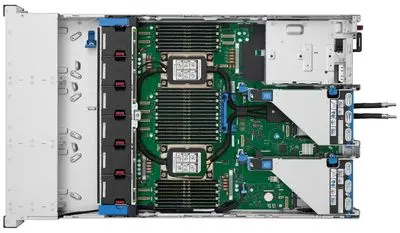
Direct Liquid Cooling is based on a simple principle: removing heat as close as possible to the server’s critical components, such as processors and accelerators. Unlike air cooling, this approach provides more precise and stable thermal control, especially under high and continuous compute loads. DLC is particularly well suited to compute-intensive, high-density environments, where thermal and energy constraints become key infrastructure factors.
THERMAL CONTROL
HIGHER DENSITY
ENERGY EFFICIENCY
A MORE SUSTAINABLE APPROACH
HPE DLC IN A LIVE ENVIRONMENT
The HPE Direct Liquid Cooling rack can be observed in real-world conditions to better understand how DLC works, its technical implications and its potential use cases. It serves as a practical basis for discussing integration, operations and configuration directly with our experts.
*
- 20% more performance per kW example compares air cooled HPE Cray XD2000 Air cooling vs DLC Benchmark is SPEChpc 2021, tiny, MPI+OpenMP 64 ranks, 14 threads (est)(per HPE Cray XD2000 chassis). Results shown are estimates based on internal performance testing conducted by HPE in April 2023.
- Cost savings and carbon reduction calculations are based on a 10,000 CPU server data center. Assumes $0.105 per kWh. The air-cooled scenario assumes 18 servers per rack. The DC example assumes 80 HPE ProLiant XL225n servers per 48U rack. Power savings for cooling are based on the same HPE estimates.